
Paint is the finish every homeowner thinks they understand — until the quotes start coming in and one painter's number is half of another's for what sounds like the "same" job. The gap almost always comes down to two things: the coating system being used, and how much surface prep and texture work is baked into the labor rate.
If you're hiring painters in Noida or anywhere across Delhi NCR, this guide breaks down realistic 2026 budgets for a 2BHK across three finish tiers, explains where wood veneer polishing costs diverge from laminate, and clarifies why brand-name paint commands a premium that isn't just marketing.
Painting Budgets for a 2BHK (2026)
Paint budgets scale primarily with two variables: the coating quality (basic emulsion vs. premium washable acrylic vs. luxury texture systems) and the amount of surface prep required to achieve a seamless finish.
| TierScopeTypical Cost (2BHK) | ||
| Basic | Standard plastic emulsion, basic putty prep | ₹50,000 – ₹90,000 |
| Mid-Range | Premium washable acrylic coatings, seamless putty finish | ₹1,00,000 – ₹1,60,000 |
| Premium | Designer texture walls, luxury luster finishes, polyurethane veneer coatings | ₹1,80,000 – ₹3,00,000 |
Basic painting covers standard plastic emulsion over a basic putty base — functional, budget-friendly coverage suited to rental properties or first-pass renovations where wall aesthetics aren't the priority.
Mid-range painting is where most owner-occupied NCR homes land: premium washable acrylic emulsions that hold up to regular cleaning, paired with a seamless putty finish that eliminates visible joint lines and surface irregularities — the difference between a wall that looks "painted" and one that looks "finished."
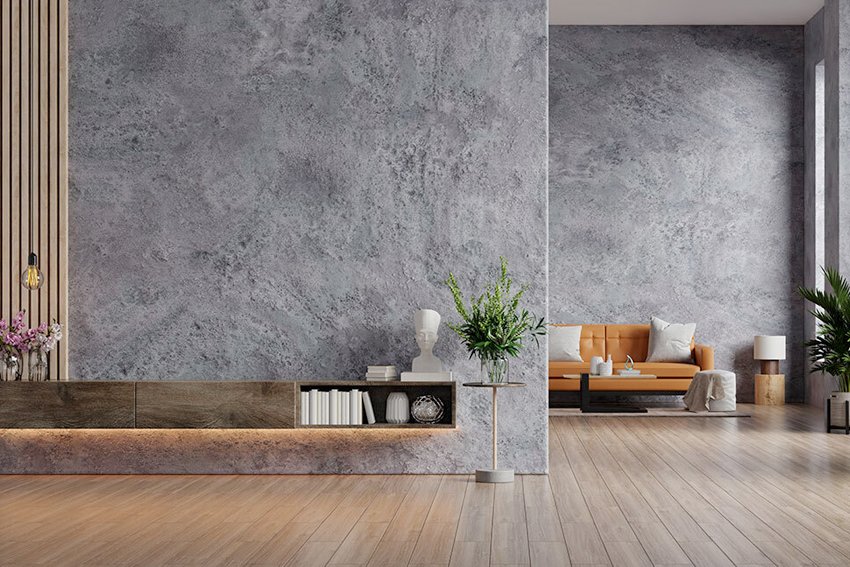
Premium painting introduces designer texture walls (stucco, lime plaster-style finishes, metallic textures), luxury luster or pearl-finish coatings for accent areas, and polyurethane (PU) coatings for wood veneer surfaces — this tier is where labor skill, not material cost, drives the majority of the price difference.
Veneer vs. Laminate Finishing Costs: The Long-Term Trade-Off
Wood finishing decisions — for wardrobe shutters, TV units, and paneling — carry a similar upfront-versus-lifetime cost logic to the marble-versus-tile decision in civil work, and it's worth walking clients through before they commit.
Wood Veneer
- Higher initial investment, both in material cost and in the skilled polishing labor required to achieve a smooth, even PU or melamine finish over a natural wood surface
- Delivers a genuinely tactile, natural grain feel that manufactured laminate cannot replicate
- Has a realistic lifespan of 12 to 20 years, but that lifespan depends on periodic re-polishing to refresh the finish as it dulls or develops minor scratches over time — an ongoing maintenance cost that clients often don't factor in at the time of installation
- Best suited to feature pieces and lower-traffic surfaces where its natural character can be appreciated and maintained
Laminate
- Lower upfront cost and faster installation, since it's a factory-finished sheet material applied directly without the layered polishing process veneer requires
- Wipe-clean and highly resistant to daily wear, staining, and scratching — a practical choice for high-traffic surfaces like kitchen shutters and children's room furniture
- Doesn't require re-polishing or periodic maintenance, making its lifetime cost more predictable even if its aesthetic ceiling is lower than veneer
The honest guidance for most clients: use veneer selectively on statement surfaces — a study table, a feature wardrobe door, a TV unit panel — and laminate on high-traffic, utility-heavy surfaces. This mirrors the same selective-luxury logic that works well in ceiling design and tile selection: spend where it's seen and touched most, save where it's purely functional.
Why the Brand Premium Matters
It's a fair question from cost-conscious homeowners: why does a brand-name paint like Asian Paints cost meaningfully more per liter than a lesser-known local brand for what looks like the same white wall?
The answer shows up over time, not on day one. Large wall expanses — living rooms, staircases, double-height walls common in NCR villas and larger apartments — are exactly where paint quality differences become visible fastest:
- Coverage consistency across large, uninterrupted surfaces, where cheaper paints are more prone to visible brush or roller marks and uneven sheen
- Washability and stain resistance, particularly relevant in Indian homes with cooking smoke, monsoon humidity, and high-touch areas near switchboards and door frames
- Color retention, where budget paints are more prone to fading or yellowing within 2–3 years, especially on walls exposed to direct sunlight
- Warranty-backed durability claims, which established brands stand behind with documented product testing, giving both the client and the contractor recourse if a finish fails prematurely
On a small accent wall, the brand premium is a marginal cost difference. Across a full 2BHK or 3BHK's wall area, that premium compounds — but so does the value, since a wall that needs repainting in three years instead of seven costs the client far more in the long run than the original brand premium would have.
Find Verified Painting Subcontractors
🎨 Browse the HomeInteriors360 Platform Directory Connect with verified local painting subcontractors across Noida and Delhi NCR who deliver designer-level texture work — compare portfolios, check past project photos, and get competitive quotes before you commit. [Explore the Directory →]
Texture work, PU veneer polishing, and seamless putty finishes are skill-dependent in a way basic emulsion painting isn't — the same coating system can look completely different depending on the crew applying it. A verified directory takes the guesswork out of matching your project's finish ambitions to a painter who's actually delivered that level of work before.
Rates reflect general Noida and Delhi NCR market ranges for 2026 and vary by vendor, wall condition, and finish complexity. Always confirm current per-sq-ft labor rates with your painting contractor before finalizing a client quote.